
Discover how switching to an AI-powered toothbrush like BrushO can transform your oral care routine. From real-time feedback to lifetime free brush head refills, this personal journey reveals the power of smart brushing habits, precision cleaning, and motivational health tech.
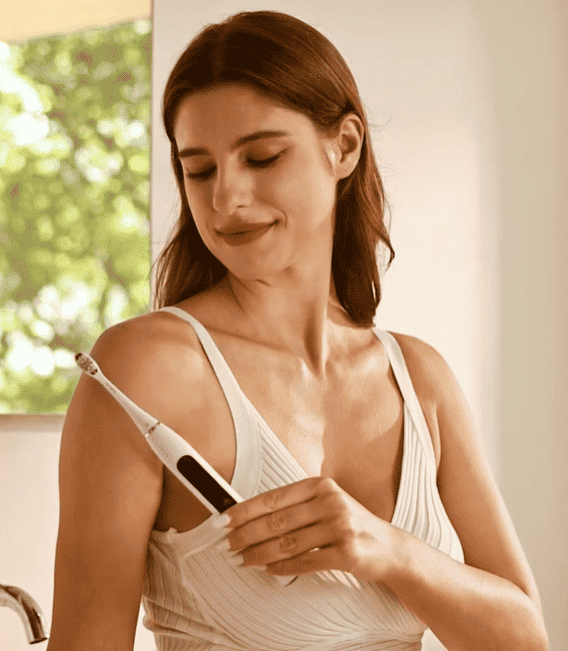
Most people brush out of habit. But after switching to BrushO, brushing became a data-backed, results-driven ritual. Unlike manual brushing or basic electric models, BrushO gave me real-time guidance and personalized feedback I didn’t know I needed.
Setting up the BrushO smart toothbrush took under a minute. Bluetooth pairing was fast, and the BrushO app asked me to define my brushing goals:
Whitening
Reducing plaque
Improving gum health
For the first time, my toothbrush was customized for me.
During my first session, I noticed how BrushO’s TFT screen showed subtle color changes to indicate pressure or coverage issues. Its 6-zone, 16-surface tracking ensured I didn’t skip areas I used to miss—like back molars or the gumline.
The app also gently warned me when I brushed too hard—one of the biggest causes of gum recession and enamel erosion.
After brushing, the app provided a detailed report:
Brushing time
Pressure data
Missed zones
Suggested improvements
Unlike other brands that bombard you with stats, BrushO focused on actionable insights, not fluff.
The app encouraged consistency. I earned points for:
Completing 2-minute sessions
Brushing twice a day
Covering all zones
These points go toward free brush head replacements, part of BrushO’s Lifetime Brush Head Program—a major cost-saver and incentive.
With 45-day battery life and 6-hour fast charging, I didn’t worry about recharging on trips. Plus, BrushO supports Qi wireless charging, which worked perfectly with my phone charger pad.
My dentist was impressed when I brought in brushing reports. Instead of vague advice, we discussed real data. My gums bled less. My breath stayed fresher. My confidence grew.
Friends who tried BrushO said the same: brushing didn’t feel like a chore anymore—it felt empowering.
BrushO isn’t just another electric toothbrush. It’s a brand driven by the belief that oral care should be intelligent, rewarding, and personalized. Here’s what makes it unique:
Recommended by 40+ dental clinics in the UK
Introduced by Stanford Innovation Labs
Lifetime free brush head plan (earn through brushing consistency)
Web3-integrated reward system turning good habits into real value
Advanced pressure, angle, and zone tracking
App-based health reports to share with your dentist
You’re not just buying a toothbrush—you’re joining a global movement that values better habits.
If you’re tired of guessing whether your brushing routine is working, it’s time to upgrade. BrushO makes oral hygiene smarter, easier, and more rewarding—and for me, that’s worth every second of the two minutes I now look forward to twice a day.

Squamous cell carcinoma is not a single, uniform disease, and two of its oral variants illustrate the extremes of its behavior. Verrucous carcinoma is a slow-growing, exophytic tumor that almost never metastasizes, while spindle cell carcinoma is an aggressive, sarcomatoid malignancy that can be ...

Most people expect a toothache to be the first sign of pulp disease, but some forms of pulpitis are surprisingly silent. A pulp polyp is the visible result of chronic hyperplastic pulpitis, a condition in which the dental pulp grows out of a large carious opening as a fleshy mass. Recognizing thi...

Dry mouth is not merely uncomfortable; it is a medical condition with real consequences for teeth, speech, swallowing and quality of life. When the salivary glands cannot produce enough saliva, medications called sialogogues can restore some of the missing fluid. Pilocarpine and cevimeline are th...

A blister in the mouth can be the first warning of a systemic autoimmune disease, and two disorders deserve particular attention in the dental chair: pemphigus vulgaris and mucous membrane pemphigoid. Both produce chronic oral ulceration, yet their immunologic targets, clinical behavior and long-...

When infection drains from a tooth, the body often creates a visible escape route, and the dentist must interpret these fistulous openings correctly. A parulis is the common gum boil that signals chronic periapical infection, while an oroantral fistula is a communication between the mouth and the...

Among the fibro-osseous lesions of the jaws, the ossifying fibroma holds a unique position because it is a true neoplasm, unlike the reactive cemento-osseous dysplasia discussed in an earlier article. It grows continuously, expands bone and requires surgical removal, and its cemental variant adds...

Not all keratocystic lesions of the jaw behave alike, and one of the most important distinctions in oral pathology separates the orthokeratinized odontogenic cyst from its better-known relative, the odontogenic keratocyst. Although the two lesions look similar under the microscope at first glance...

Periodontal disease is usually a slowly progressive infection, but a rare form called necrotizing ulcerative periodontitis destroys tissue with alarming speed. Unlike ordinary periodontitis, this condition produces necrotic, cratered papillae, deep pocketing and rapid bone loss, and it appears al...

Every parent has met the child who refuses to eat because of painful mouth sores, and most of these children have one of two viral illnesses: herpangina or hand, foot and mouth disease. Both are caused by enteroviruses, both produce fever and oral ulcers, and both are overwhelmingly common in you...

Cementoosseous dysplasia is one of the most common fibro-osseous lesions found on dental radiographs, yet it is also one of the most frequently misdiagnosed. The lesion replaces normal bone with cellular fibrous tissue and cementum-like material, and it appears in several forms that range from a ...

Construire rapidement et à faible coût un réseau de données sur la santé bucco-dentaire de manière que tout le monde puisse y contribuer.
Construire rapidement et à faible coût un réseau de données sur la santé bucco-dentaire de manière que tout le monde puisse y contribuer.


Address: RM 1427, 14/F RADIO CITY 505, HENNESSY RD CAUSEWAY BAY, HONG KONG
Code: 000000
Phone: +852-53758652
Email: customerservice@brusho.com