
Dental decline rarely begins with visible cavities or pain. Instead, it develops gradually through enamel demineralization, microbial imbalance, gum inflammation, and mechanical wear. Because these changes progress silently, many individuals overlook early indicators until restorative treatment becomes necessary. Recognizing subtle signals — such as new sensitivity, texture changes, discoloration, or persistent breath odor — enables earlier intervention and significantly improves long-term outcomes. This article examines clinically relevant early warning signs, explains their biological causes, and outlines preventive strategies grounded in modern oral health science. Precision daily hygiene, supported by guided brushing technologies like BrushO, can play a crucial role in slowing or reversing early-stage decline.
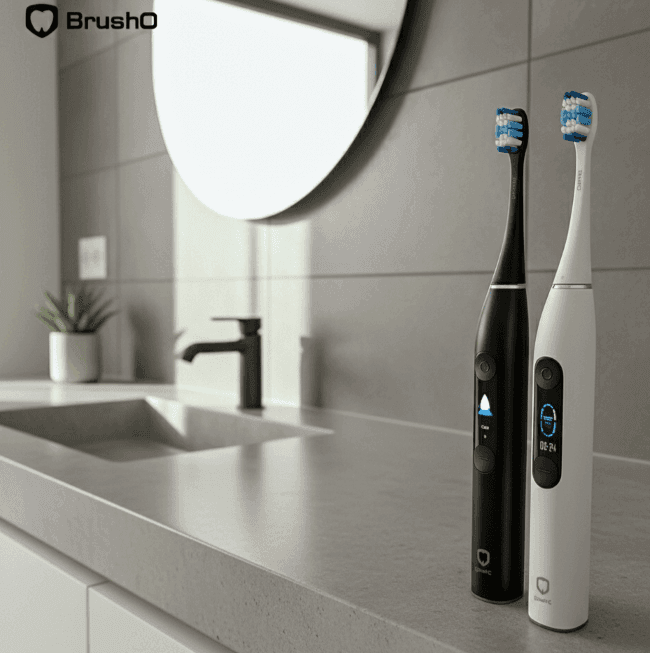
A common misconception is that teeth “go bad” overnight. In reality, deterioration is cumulative and influenced by:
• Oral hygiene consistency
• Diet acidity and sugar exposure
• Microbial composition
• Mechanical pressure or grinding
• Genetic and systemic factors
Processes like enamel thinning and bacterial colonization unfold gradually, often over years. Because progression is slow, early indicators feel minor — yet they are clinically meaningful signals.
New or fluctuating sensitivity is often one of the earliest measurable signs of structural change. Teeth reacting to:
• Cold beverages
• Hot liquids
• Sweet foods
• Air exposure
may indicate:
• Enamel thinning
• Dentin exposure
• Early gum recession
Sensitivity reflects increased permeability of the tooth surface and should not be dismissed as temporary irritation.
Healthy enamel is naturally smooth due to its crystalline mineral structure. A shift toward:
• Roughness
• Chalkiness
• Patchiness
can suggest:
• Acid erosion
• Plaque accumulation
• Mineral loss
Texture changes frequently precede visible lesions, making tactile awareness a valuable early diagnostic clue.
Tooth shade changes can reflect underlying mineral status rather than cosmetic staining.
Indicators include:
• Yellowing near gum margins (enamel thinning)
• Grey dullness (structural stress or wear)
• White opaque spots (early demineralization)
White spot lesions remain reversible when addressed early through remineralization-focused hygiene.
Healthy gingival tissue should remain stable during brushing and flossing. Early inflammation may present as:
• Mild bleeding
• Slight swelling
• Pink-to-red color shifts
• Localized tenderness
These signs suggest early gingivitis — a reversible stage if plaque disruption improves.
Chronic halitosis often reflects microbial imbalance rather than superficial hygiene lapses. Rapid odor return after brushing indicates:
• Plaque accumulation in missed zones
• Tongue biofilm presence
• Subgingival bacterial activity
This is frequently an early ecological signal of oral imbalance.
Gradual flattening or shortening of tooth edges may result from:
• Bruxism (grinding)
• Abrasive brushing
• Acid erosion
Accelerated wear signals mechanical or chemical stress exceeding natural adaptation rates.
Early decline lacks urgency because:
• Pain is absent
• Changes are gradual
• Function remains intact
Humans adapt to incremental shifts, delaying intervention. Unfortunately, this allows preventable conditions to progress.
Intervening early dramatically alters long-term outcomes. Effective strategies include:
• Thorough plaque disruption
• Consistent gumline cleaning
• Controlled brushing pressure
• Dietary acid awareness
• Regular monitoring
Precision and consistency matter more than intensity.
Modern oral care tools assist in detecting behavioral gaps contributing to decline. BrushO supports early-stage prevention through:
• Zone-based coverage guidance
• Pressure monitoring
• Habit consistency tracking
• Missed-area reduction
By improving daily technique quality, users strengthen enamel protection and gum stability before clinical deterioration occurs.
Dental decline begins quietly — through biological shifts rather than acute events. Sensitivity, texture variation, discoloration, gum response, and breath changes are not trivial inconveniences but early health signals. Recognizing and responding to them allows intervention at a reversible stage. With consistent hygiene, informed awareness, and precision-guided brushing support, long-term oral resilience becomes achievable.
Feb 19
Feb 18

Hyperdontia is the presence of one or more teeth in excess of the normal dental formula, and the resulting teeth are described as supernumerary. The condition is common enough to appear in routine practice but variable enough in presentation that the decision to intervene is rarely straightforwar...

Few patients complete orthodontic treatment without asking whether their teeth will move back. The honest answer is that they will, to some degree, in the majority of cases. Relapse is not a failure of treatment but a predictable biological response, and understanding why it happens is the basis ...

The mandible is the largest and most frequently fractured bone of the facial skeleton, and its management sits at the interface between trauma surgery and restorative dentistry. Treatment has shifted over four decades from prolonged maxillomandibular fixation towards rigid internal fixation with ...

Chronic liver disease affects hundreds of millions of people worldwide, and its prevalence continues to rise with the epidemic of metabolic liver disease. The liver is central to haemostasis, drug metabolism and immune competence, and its failure therefore alters the risk profile of almost every ...

Excessive gingival display, commonly described as a gummy smile, is one of the most frequent aesthetic concerns presented to dental practitioners. The condition is not a single entity but a clinical presentation that can arise from skeletal, gingival, muscular or dental factors, and the treatment...

Drug-induced gingival overgrowth is a well-recognised adverse effect of several widely prescribed medications, and it remains one of the most common drug-related findings in periodontal practice. The condition produces firm, fibrous enlargement of the gingiva that can interfere with speech, masti...

Denture stomatitis is an inflammatory condition of the denture-bearing mucosa that affects a large proportion of removable prosthesis wearers, yet it is frequently dismissed as a cosmetic annoyance. The condition is driven by a Candida biofilm on the fitting surface of the prosthesis, and it is m...

Chronic kidney disease affects an estimated 850 million people worldwide, and the number of patients surviving on dialysis or with a renal transplant continues to rise. These patients carry an oral disease burden that is substantially higher than that of the general population, and their medical ...

Angular cheilitis is an inflammatory lesion of the labial commissures that presents with erythema, fissuring and crusting at the corners of the mouth. It is one of the most common conditions encountered in general dental practice, yet it is frequently treated as a simple fungal infection and allo...

Adverse reactions to dental materials are uncommon but they are not rare, and they are frequently misdiagnosed because the oral mucosa responds to allergens in a limited number of ways. A burning sensation, a persistent ulcer or an unexplained area of erythema may all represent a hypersensitivity...

Build an oral health data network quickly and at low cost in a way that everyone can build.


Address: RM 1427, 14/F RADIO CITY 505, HENNESSY RD CAUSEWAY BAY, HONG KONG
Code: 000000
Phone: +852-53758652
Email: customerservice@brusho.com